

MO3 Murder Trial: David Finn Explains the High-Stakes Strategy Behind Jury Selection, Plea Deals and Yella Beezy’s Courtroom Appearance
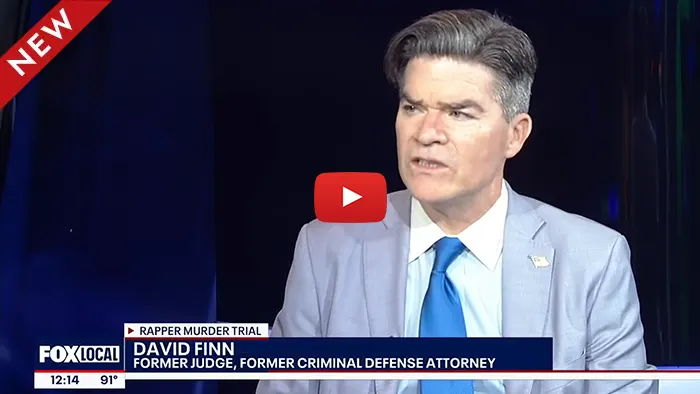
As jury selection moves forward in the murder case involving Dallas rapper MO3, former judge and veteran criminal defense attorney David Finn says the courtroom dynamics may offer important clues about what happens next—not only for defendant Keewon White, but also for Yella Beezy.
Finn recently spoke with FOX 4 about the case and the unusual strategic questions surrounding the separate prosecutions.
MO3, whose legal name was Melvin Noble, was shot and killed on a Dallas highway in November 2020. Prosecutors allege White was the gunman, while Yella Beezy has been accused of financing the killing. The defendants are being tried separately.
With White’s case moving toward trial, Finn says the stakes extend far beyond the verdict in this first proceeding.
Could a Plea Deal Still Happen?
One of the biggest questions is whether White could still reach an agreement with prosecutors.
According to Finn, that possibility does not necessarily disappear simply because jury selection has begun. But the opportunity becomes considerably less likely once the trial reaches opening statements.
Cases involving multiple defendants can create intense strategic pressure because cooperation by one defendant can fundamentally alter the prosecution of another.
Finn compared the situation to a game of “musical chairs.”
The first person willing to cooperate may have the greatest bargaining leverage. Once prosecutors obtain the testimony or evidence they need, the incentive to offer favorable terms to someone else can diminish significantly.
That creates an important question hanging over White’s trial:
Will everyone proceed to trial—or will someone decide that cooperation offers a better outcome?
Why Yella Beezy’s Presence in Court Stands Out
One of the most striking aspects of the proceedings has been Yella Beezy’s decision to attend White’s trial.
Finn told FOX 4 that he found the situation extraordinary.
After participating in more than 500 jury trials during his career, Finn said he could not recall another case in which the person accused of financing a murder sat in the courtroom directly behind the person accused of carrying it out.
Yella Beezy is facing his own separate prosecution, making his presence particularly noteworthy.
There may be many reasons for attending, and his presence should not be interpreted as evidence of guilt or innocence. But from a trial-strategy perspective, Finn believes it is highly unusual.
White’s Verdict Could Have Major Consequences for Yella Beezy
Perhaps the most important legal issue Finn discussed involves the type of verdict the jury could return.
The jury does not necessarily face a simple choice between conviction on the prosecution’s complete theory and acquittal.
Jurors could potentially conclude that White committed murder while rejecting the allegation that the killing was carried out as part of a murder-for-hire arrangement.
That distinction could become extremely important.
If White were convicted of murder but the jury rejected the murder-for-hire theory, attorneys representing Yella Beezy could potentially point to that outcome when attacking the prosecution’s case against their client.
Their argument could essentially become:
The first jury believed White was responsible for the killing, but it was not convinced beyond a reasonable doubt that prosecutors proved the alleged murder-for-hire arrangement.
That would not automatically determine the outcome of Yella Beezy’s case. His prosecution would remain separate, with its own evidence, witnesses and jury.
But strategically, it could create a significant issue for prosecutors.
A Lesser Conviction Would Still Carry Serious Consequences
Rejecting a murder-for-hire theory would not necessarily mean White avoids a lengthy prison sentence.
Finn explained that a prior felony allegation could potentially enhance the applicable punishment range.
Depending on the charges ultimately proven and any enhancement found applicable, White could still face a sentence extending from approximately 15 years to life in prison.
That creates another layer of complexity in any potential plea negotiations.
The defense must weigh the risks of going before a jury against whatever prosecutors might be willing to offer in exchange for a guilty plea—and potentially cooperation.
What Happens If White Decides to Cooperate?
This may be the scenario with the greatest potential to reshape the entire case.
If White were to reach an agreement with prosecutors and provide testimony relevant to Yella Beezy’s prosecution, the landscape could change quickly.
Finn noted that the judge has apparently cautioned Yella Beezy about being prepared for his own case to move forward.
That matters because cooperation from an alleged participant can become powerful evidence in a conspiracy or murder-for-hire prosecution.
At the same time, cooperating witnesses create their own defense opportunities.
If a defendant receives reduced charges, sentencing consideration or some other benefit in exchange for testimony, defense attorneys can aggressively question that witness about motive, credibility and whether the testimony was influenced by the deal.
In other words, cooperation can strengthen the prosecution while simultaneously creating a major avenue for cross-examination.
Why Jury Selection Matters So Much
High-profile criminal cases are often won or lost long before closing arguments.
Jury selection gives both sides an opportunity to identify potential jurors whose experiences, beliefs or existing knowledge of the case could affect their ability to evaluate the evidence impartially.
That task becomes especially complicated when the defendants or victim are well-known figures and the case has received extensive media coverage.
The objective is not simply to find jurors who have never heard of the case.
The central question is whether each juror can put aside outside information and decide the case based solely on the evidence presented in court and the law provided by the judge.
For defense attorneys, understanding how prospective jurors think about cooperating witnesses, circumstantial evidence, police investigations and reasonable doubt can be critical.
The First Trial Could Shape the Second
Although White and Yella Beezy face separate proceedings, the cases are strategically intertwined.
White’s trial could reveal prosecution witnesses, expose weaknesses in testimony, establish how jurors respond to the state’s theory and provide both sides with valuable information about how the evidence performs in an actual courtroom.
Most importantly, the verdict could reveal whether jurors accept the prosecution’s alleged murder-for-hire theory.
A conviction consistent with that theory could strengthen prosecutors heading into the subsequent case.
A verdict for ordinary murder that rejects the murder-for-hire component could create a potentially valuable argument for Yella Beezy’s defense.
And a plea agreement involving cooperation could transform the second prosecution altogether.
That is why the proceedings against White are about much more than one defendant.
Finn: The Case Increasingly Looks Headed for Trial
Despite the continuing possibility of an agreement, Finn says the courtroom dynamics currently suggest that White may be prepared to take his chances with a jury.
Finn discussed the unusual circumstances with several other experienced attorneys and said they were similarly struck by Yella Beezy’s presence during the proceedings.
His current assessment is that the parties appear increasingly likely to proceed through a full trial rather than resolve the matter through a last-minute agreement.
Of course, criminal cases can change quickly.
Until opening statements begin—and sometimes even afterward—negotiations, witness decisions and new developments can dramatically alter the strategic landscape.
For now, however, all eyes are on White’s jury.
Its eventual decision could influence far more than the fate of the man currently sitting at the defense table.
David Finn is a former criminal court judge and experienced Dallas criminal defense attorney who has handled more than 500 jury trials. He regularly provides legal analysis on significant criminal cases and issues involving the Texas justice system.
This article discusses pending criminal allegations and legal strategy for informational purposes. All defendants are presumed innocent unless and until proven guilty beyond a reasonable doubt.


Phone Numbers
Office: (214) 538-6629
Office Location
Dallas