


Dallas Environmental Crimes Defense Lawyer
Federal environmental crimes carry severe penalties, including years in prison and fines that can reach millions of dollars. The EPA and Department of Justice aggressively prosecute violations of the Clean Water Act, Clean Air Act, and hazardous waste laws. Anyone under federal investigation for environmental violations needs experienced legal defense to protect their rights and challenge the government’s case.
As a respected criminal defense attorney serving clients throughout Dallas, David Finn understands how federal prosecutors build environmental cases and what defense strategies work best. David Finn has defended individuals and businesses facing complex federal charges and knows what’s at stake when government agents come knocking.
Contact David Finn and start protecting your rights with his experienced defense. Call us today at (214) 538-6629.
What Are Federal Environmental Crimes?
Federal environmental crimes cover conduct that violates major environmental statutes enforced by the Environmental Protection Agency (EPA) and prosecuted by the Department of Justice (DOJ).
Common federal environmental crimes include:
- Illegally discharging pollutants into navigable waters
- Improper storage, transport, or disposal of hazardous waste
- Releasing hazardous air pollutants without authorization
- Falsifying environmental monitoring reports or compliance records
- Tampering with pollution control or monitoring equipment
- Operating industrial facilities without required federal permits.
Both individuals and corporations face criminal liability. Federal prosecutors regularly charge company owners, executives, managers, and even lower-level employees alongside the businesses they work for. The government targets the people who made decisions, not just the corporate entity.
The FBI partners with the EPA and other federal agencies to investigate these offenses. Investigations draw on resources from multiple agencies, including the U.S. Fish and Wildlife Service, the Department of Agriculture, and Homeland Security Investigations. The DOJ’s Environmental Crimes Section brings criminal cases against individuals and corporations in all 94 federal judicial districts.
Clean Water Act Violations
The Clean Water Act prohibits discharging pollutants into U.S. waters without proper permits. According to the EPA’s criminal provisions for water pollution, violations are classified based on whether the defendant acted negligently or knowingly:
- Negligent violations carry up to one year in prison and fines between $2,500 and $25,000 per day. A second conviction doubles those penalties to two years imprisonment and $50,000 daily fines.
- Knowing violations bring harsher consequences. First-time offenders face up to three years in prison and fines from $5,000 to $50,000 per day. Repeat offenders face six years and $100,000 daily.
The most serious Clean Water Act offense is knowing endangerment. When a defendant knowingly places another person in imminent danger of death or serious bodily injury through a water pollution violation, they face up to 15 years in federal prison. Organizations convicted of knowing endangerment can be fined up to $1 million per violation.
Other Clean Water Act crimes include:
- Failing to report discharges of oil or hazardous substances
- Making false statements to federal regulators
- Violating pretreatment standards for industrial discharges
- Tampering with monitoring equipment or methods.
Clean Air Act Violations
The Clean Air Act regulates emissions and targets hazardous air pollutant releases. The EPA’s criminal provisions for air pollution cover everything from permit violations to improper asbestos handling.
Knowing violations of the Clean Air Act carry up to five years in prison. Penalties double for second and subsequent convictions. Making false statements or failing to file required reports brings up to two years imprisonment.
Knowing endangerment under the Clean Air Act carries especially harsh penalties. When someone knowingly releases hazardous air pollutants and places another person in imminent danger of death or serious injury, they face up to 15 years in federal prison and fines. Negligent endangerment carries up to one year.
Asbestos violations receive particular attention from federal prosecutors. Owners or operators of demolition or renovation projects who fail to comply with asbestos work practice standards or waste disposal requirements face criminal charges. Cases involving worker exposure or public health risks are prioritized for prosecution.
Resource Conservation and Recovery Act (RCRA) Violations
RCRA governs hazardous waste from generation through final disposal. The EPA’s RCRA criminal provisions target illegal handling at every stage.
- Violating material permit conditions brings up to two years imprisonment and $50,000 per day. Transporting hazardous waste without the required manifest documentation is a separate criminal offense.
- Knowingly treating, storing, or disposing of hazardous waste without a permit carries up to five years in prison and fines of $50,000 per day of violation. Penalties double for subsequent convictions. The same penalties apply to knowingly transporting hazardous waste to an unpermitted facility.
- Making false statements in RCRA compliance documents or destroying required records each carry their own penalties. Prosecutors often stack these charges alongside substantive violations, adding years to potential sentences.
- RCRA endangerment is among the most serious federal environmental crimes. When someone knowingly handles hazardous waste in a way that places another person in imminent danger of death or serious injury, they face up to 15 years in prison. Organizations convicted of knowing endangerment face fines up to $1 million.
How Federal Environmental Investigations Develop
Federal environmental cases begin in several ways. Routine facility inspections may uncover violations. Industrial accidents trigger investigations. Whistleblowers report illegal activity. Competitors file complaints. Sometimes investigations grow out of civil enforcement matters when regulators discover evidence suggesting criminal conduct.
Federal investigators gather evidence through:
- Facility inspections and environmental sampling
- Grand jury subpoenas for documents and testimony
- Witness interviews with employees, contractors, and neighbors
- Laboratory testing and forensic analysis of samples
- Surveillance and undercover operations
- Search warrants executed at business and personal locations.
The EPA’s criminal enforcement program opened 187 new cases in fiscal year 2025, according to the agency’s annual enforcement results. That year, federal prosecutors charged 156 defendants, the highest number since 2016, indicating they’ve ramped up efforts in recent years. They also secured total fines and restitution exceeding $600 million. Courts imposed 72 years of incarceration across all environmental crime cases.
Because environmental crimes involve complex technical evidence, prosecutors rely on expert testimony about contamination levels, exposure risks, and regulatory standards. David Finn understands how to challenge this scientific evidence and hold the government to its burden of proof.
Parallel Civil and Criminal Proceedings
Environmental violations frequently trigger both civil and criminal investigations running at the same time. The EPA’s enforcement offices coordinate closely, and a company facing civil penalties may simultaneously be under criminal investigation.
This creates difficult strategic decisions. Statements made in civil proceedings can be used in criminal cases. Documents produced in response to civil subpoenas become available to criminal prosecutors. Remediation efforts might help resolve civil liability but could be characterized as admissions of guilt in criminal proceedings.
An experienced defense attorney helps clients handle these parallel tracks without inadvertently making their criminal exposure worse. Sometimes the best strategy involves resolving civil matters quickly. Other times, delaying civil proceedings while criminal issues are addressed makes more sense. Each situation requires careful analysis.
The Importance of Mental State in Environmental Prosecutions
Most federal environmental crimes require prosecutors to prove a specific mental state. This requirement creates important defense opportunities.
- Negligent violations are misdemeanors. Under the Clean Water Act, negligent violations are expressly misdemeanors, contrasted with knowing felonies (however, not all environmental crimes across all statutes follow this exact pattern). Prosecutors must show that the defendant should have known their conduct violated environmental requirements. These charges carry shorter sentences but can still result in federal convictions.
- Knowing violations are felonies requiring proof that the defendant was aware of their conduct. The government must demonstrate that the person knew they were discharging pollutants, handling hazardous waste, or engaging in the prohibited activity. Prosecutors don’t need to prove the defendant knew their specific actions were illegal under environmental law.
- For knowing endangerment charges, prosecutors must prove the defendant knew their conduct placed others in imminent danger of death or serious bodily injury. These are the most serious environmental offenses and carry the longest sentences.
Understanding these distinctions shapes defense strategy. What the government can actually prove about a defendant’s knowledge often determines whether charges succeed and what severe consequences will be.
Defense Strategies for Federal Environmental Charges
Several defense approaches apply depending on the specific facts and charges involved:
- Challenging knowledge is often the most effective defense. If prosecutors can’t prove the defendant knew about the discharge, contamination, or violation, knowing violation charges fail. This defense requires careful examination of what information the defendant actually received and when they received it. Email records, meeting notes, and testimony from co-workers all become relevant.
- Permit compliance offers another avenue. If a company operated within its permit terms and followed all required procedures, this can defeat charges depending on unauthorized activity. Prosecutors must prove the defendant exceeded permit limits or operated without required authorization.
- Attacking the scientific evidence is frequently critical. Environmental prosecutions depend on sampling, laboratory testing, and expert analysis. Defense attorneys can challenge whether investigators followed proper collection protocols, whether laboratories maintained an appropriate chain of custody, whether testing methods were scientifically reliable, and whether results actually prove what prosecutors claim. Excluding or undermining this evidence can cripple the government’s case.
- Constitutional challenges apply when investigators violate a defendant’s rights. Illegal searches, coerced statements, grand jury abuse, or other constitutional violations can result in evidence being suppressed. Without key evidence, prosecutors may be forced to dismiss charges or accept reduced pleas.
- Cooperation and remediation don’t defeat criminal liability, but they can influence outcomes. Demonstrating good faith efforts to fix problems, self-reporting violations, and implementing compliance programs may affect charging decisions and sentencing recommendations.
Attorney David Finn evaluates each case individually to identify which defenses offer the strongest chance of success.
Why Early Legal Representation Matters
Federal environmental investigations often proceed for months or years before formal charges. The target may not realize they’re under investigation until agents arrive with a search warrant or grand jury subpoena.
Getting legal help early provides significant advantages. An experienced attorney can:
- Monitor the investigation’s progress and scope
- Advise on all interactions with investigators and regulators
- Ensure preservation of evidence supporting potential defenses
- Negotiate with prosecutors before charges are filed
- Potentially resolve matters without criminal charges through civil settlements or deferred prosecution agreements.
Once a federal grand jury returns an indictment, options narrow considerably. Conviction means prison time, substantial fines, and lasting consequences. Individuals lose careers and professional licenses. Businesses face debarment from government contracts and permit revocations that can shut down operations entirely.
Supporting Facts
Federal environmental enforcement remains aggressive. In fiscal year 2025, the EPA’s criminal program charged the most defendants since 2016, according to agency enforcement data. The program also secured over $1 billion in forfeiture of illegal proceeds.
The Department of Justice’s Environment and Natural Resources Division describes itself as the nation’s largest environmental law firm. It’s tasked to bring criminal cases against individuals and corporations who violate laws protecting the environment, worker safety, and public health.
Frequently Asked Questions
Can I go to federal prison for an environmental crime?
Yes. Many serious federal environmental crimes are felonies, carrying prison sentences from one to 15 years depending on the specific offense and whether the violation was negligent or knowing. Knowing endangerment offenses that place people at risk of death or serious injury carry the longest sentences.
What’s the difference between civil and criminal environmental enforcement?
Civil enforcement typically results in fines and court orders requiring corrective action. Criminal enforcement adds the possibility of imprisonment and targets the most serious violations, particularly those involving intentional misconduct, false statements to regulators, or significant harm to people or the environment.
Can individual employees face charges for company violations?
Yes. Federal prosecutors regularly charge corporate officers, managers, and employees alongside companies. The government specifically targets individuals responsible for making decisions or carrying out illegal conduct, regardless of whether they personally benefited from the violation.
What should I do if federal investigators contact me?
Contact a criminal defense attorney immediately before answering any questions. Anything you say during an investigation can be used against you in court. You have the right to remain silent and the right to have an attorney present during questioning. Exercise those rights.
Key Points to Remember
- Federal environmental crimes carry serious penalties, including years in prison and fines reaching tens of thousands of dollars per day.
- The EPA and DOJ actively investigate and prosecute violations of the Clean Water Act, Clean Air Act, and RCRA.
- Both individuals and corporations face criminal liability for environmental violations.
- Mental state requirements create defense opportunities based on what the defendant actually knew.
- Early legal representation helps protect rights and build the strongest possible defense before charges are filed.
Contact David Finn Dallas, Criminal Lawyer & DWI Attorney, for Help With Your Criminal Defense Case
Federal environmental charges threaten your freedom, finances, and future. You need an attorney who understands both the complex regulations involved and how to effectively challenge the government’s case.
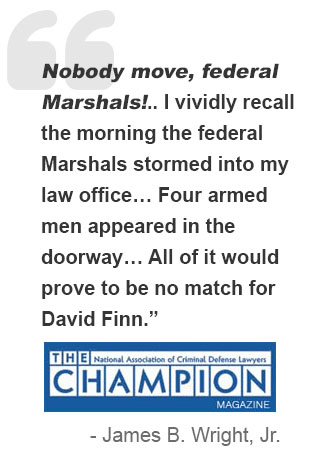
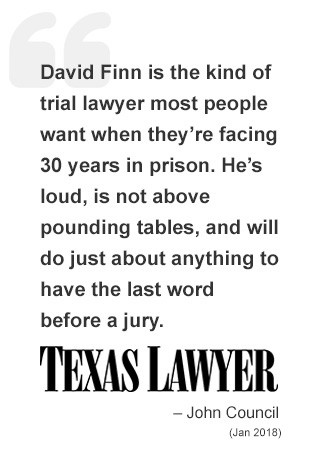
David Finn is a top-rated criminal defense attorney in Dallas with experience handling serious federal charges. Visit his attorney profile to learn more about his experience and results. Call (214) 538-6629 to schedule a consultation.


Phone Numbers
Office: (214) 538-6629
Office Location
Dallas